
When the Turkish economy sways, the escort industry in Turkey feels the tremors just as sharply as any other market. From sudden shifts in consumer spending to changes in foreign visitor numbers, each economic pulse can reshape supply, pricing, and safety for providers and clients alike.
Key Takeaways
- GDP growth or contraction directly influences disposable income, shifting demand for high‑end versus budget services.
- Rising unemployment often pushes more workers into escort work while simultaneously tightening client budgets.
- Currency devaluation attracts foreign clients looking for cheaper rates, but it also raises operational costs for local providers.
- Tourism spikes boost short‑term demand, especially in coastal cities like Antalya and Istanbul.
- Online platforms and regulatory crackdowns can either amplify market resilience or force services underground.
Economic Indicators That Influence the Escort Market
Understanding the macro forces is the first step toward reading the market’s pulse.
Gross Domestic Product (GDP) is the broadest measure of economic output. When Turkey’s GDP grows at a steady 4-5 % annually, average household spending rises, and higher‑priced escort services see a modest lift. Conversely, a contraction of 2 % or more often squeezes discretionary budgets, prompting clients to seek shorter sessions or lower‑cost options.
Unemployment rate tracks the share of the labor force without a job. Sharp spikes-like the 13 % peak in late 2022-correlate with an influx of new entrants into the escort industry, as people look for faster cash flow. Yet the same unemployment rise reduces the overall pool of paying clients, creating a paradox of higher supply but lower demand.
Currency devaluation (the Turkish lira’s fall against the dollar and euro) reshapes pricing dynamics. A weaker lira makes services cheaper for foreign visitors, which can temporarily boost revenue in tourist hubs. At the same time, local providers face higher costs for rent, internet, and transport because many expenses are still tied to foreign‑currency invoices.
Tourism sector is a seasonal engine for demand. When tourism arrivals grow by 10 % year‑over‑year, the escort market often sees a coincident rise in short‑term bookings, especially for “travel companion” packages. A dip in tourist numbers-such as the 2023 pandemic‑related slump-drives providers to lean more on domestic clients.
Recession Effects: Demand Shifts and Pricing Strategies
During a recession, disposable income contracts across the board. Providers respond by adjusting service length, offering bundle discounts, or shifting focus to lower‑cost segments. Data from the Turkish Statistical Institute (TurkStat) shows that in the 2020-2021 downturn, average session prices fell by roughly 12 % while the number of bookings per month rose by 8 %, reflecting a price‑sensitivity spike.
Providers who diversify-adding virtual companionship or chat‑only services-tend to preserve revenue because digital offerings have lower overhead and can appeal to clients still tightening their wallets.
Currency Devaluation and Cross‑Border Clients
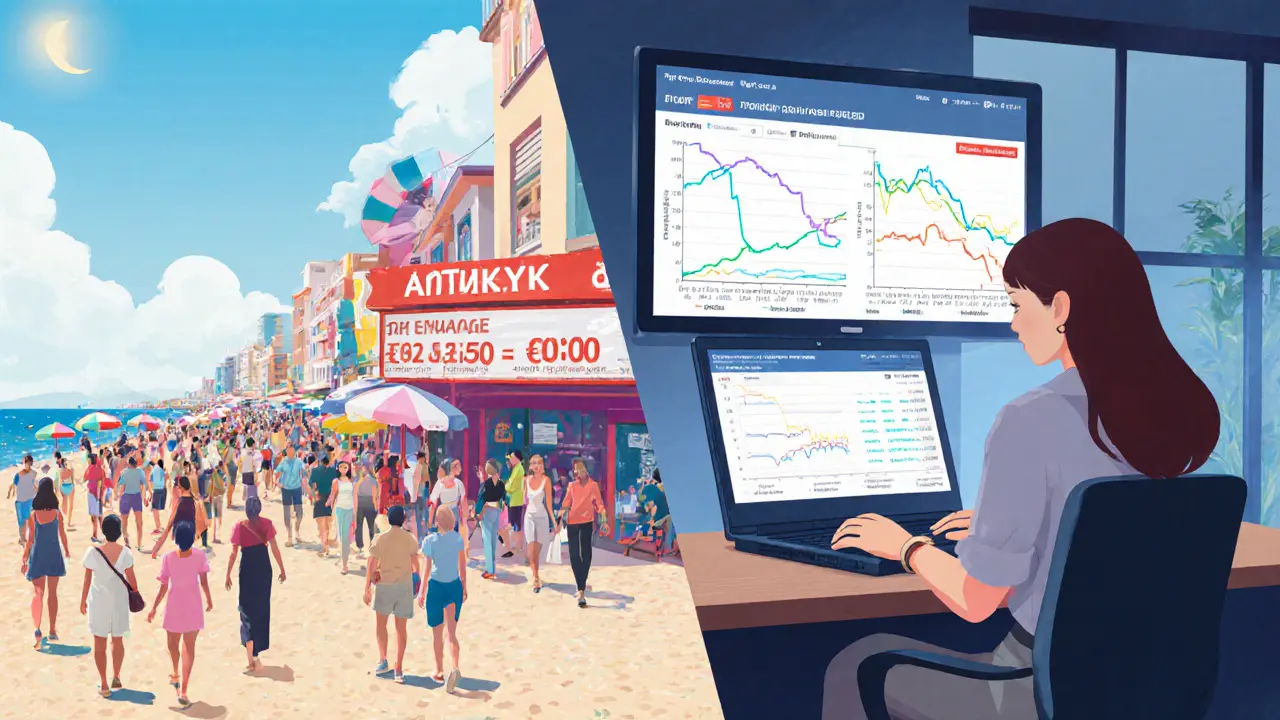
When the lira lost around 35 % of its value against the euro in 2022, many European travelers found Turkish escort services dramatically cheaper. Agencies in Istanbul reported a 20 % surge in foreign bookings during the latter half of that year. However, the same devaluation raised costs for local operators who needed to purchase advertising on international platforms priced in dollars.
To balance this, savvy agencies began pricing in euros for foreign clients while keeping a lira‑based rate for domestic customers. This dual‑currency model helped lock in higher margins without alienating local clientele.
Online Platforms, Regulation, and Market Resilience
Online platforms like “Na-Na” and “LeadBaby” act as marketplaces, providing visibility, payment processing, and client reviews. When regulations tighten-such as the 2023 law requiring platforms to verify identities-the immediate effect is a temporary dip in listings as operators scramble to comply.
Yet platforms that invest in secure payment gateways and user‑education often emerge stronger, because they build trust that attracts higher‑spending clients. The regulatory environment, therefore, can act as both a filter and a catalyst for professionalization.

Case Study: 2020‑2023 Economic Shocks
| Indicator | Trend (2020‑2023) | Direct Impact | Provider Response |
|---|---|---|---|
| GDP Growth | -1.2 % (2020), 2.8 % (2021‑2022), 3.5 % (2023) | Initial dip in luxury bookings; recovery in 2022‑2023 | Shift to virtual services in 2020; re‑introduce premium packages in 2022 |
| Unemployment Rate | 12.1 % (2020), 11.5 % (2021‑2022), 10.8 % (2023) | More workers entering escort work; client base contracts | Offer flexible hours; lower entry‑level pricing |
| Lira/USD | 7.5 (2020), 13.4 (2022), 10.9 (2023) | Foreign clients attracted; local costs rise | Dual‑currency pricing; renegotiate vendor contracts |
| Tourism Arrivals | -45 % (2020), +20 % (2021), +8 % (2022‑2023) | Sharp drop in 2020; rebound in 2022 | Focus on domestic market 2020‑2021; leverage tourist season 2022‑2023 |
Future Outlook: Preparing for the Next Economic Wave
Looking ahead, analysts project a moderate GDP growth of 3 % annually through 2026, coupled with a gradual decline in unemployment. If inflation stabilizes, the escort market could see a steady rise in premium service demand.
Key strategies for providers include:
- Investing in secure, multi‑currency payment solutions.
- Building a mixed portfolio of in‑person, virtual, and subscription‑based offerings.
- Maintaining compliance with evolving regulations to avoid platform bans.
- Partnering with reputable online platforms that provide data analytics for pricing optimization.
By watching macro‑economic signals-GDP reports, labor statistics, currency trends-providers can anticipate market shifts and adjust quickly, turning economic turbulence into a competitive edge.
How does a recession affect the pricing of escort services in Turkey?
During a recession, disposable income drops, so many providers lower session lengths or offer bundled discounts. Data from 2020‑2021 shows average prices fell by about 12 % while the number of bookings rose, indicating clients look for cheaper options but still want the service.
Will a weaker Turkish lira attract more foreign clients?
Yes. A devalued lira makes local rates cheaper for visitors paying in euros or dollars. In 2022, a 35 % lira drop led to a 20 % increase in European bookings, especially in tourist hotspots.
What role do online platforms play when regulations tighten?
Platforms that quickly adapt-adding identity verification and secure payment tools-can retain their listings, while smaller sites may lose visibility. Compliance often separates professional operators from informal ones.
How important is tourism for the escort market?
Tourism is a seasonal driver. A 10 % rise in arrivals typically translates into a 5‑7 % bump in short‑term bookings, especially for “companion” packages. When tourism fell in 2020, many providers shifted focus to domestic clients.
What strategies can providers use to stay resilient?
Diversify service types (in‑person, virtual, subscription), adopt multi‑currency pricing, stay compliant with local laws, and leverage data‑driven platforms for pricing decisions.